




Introduction
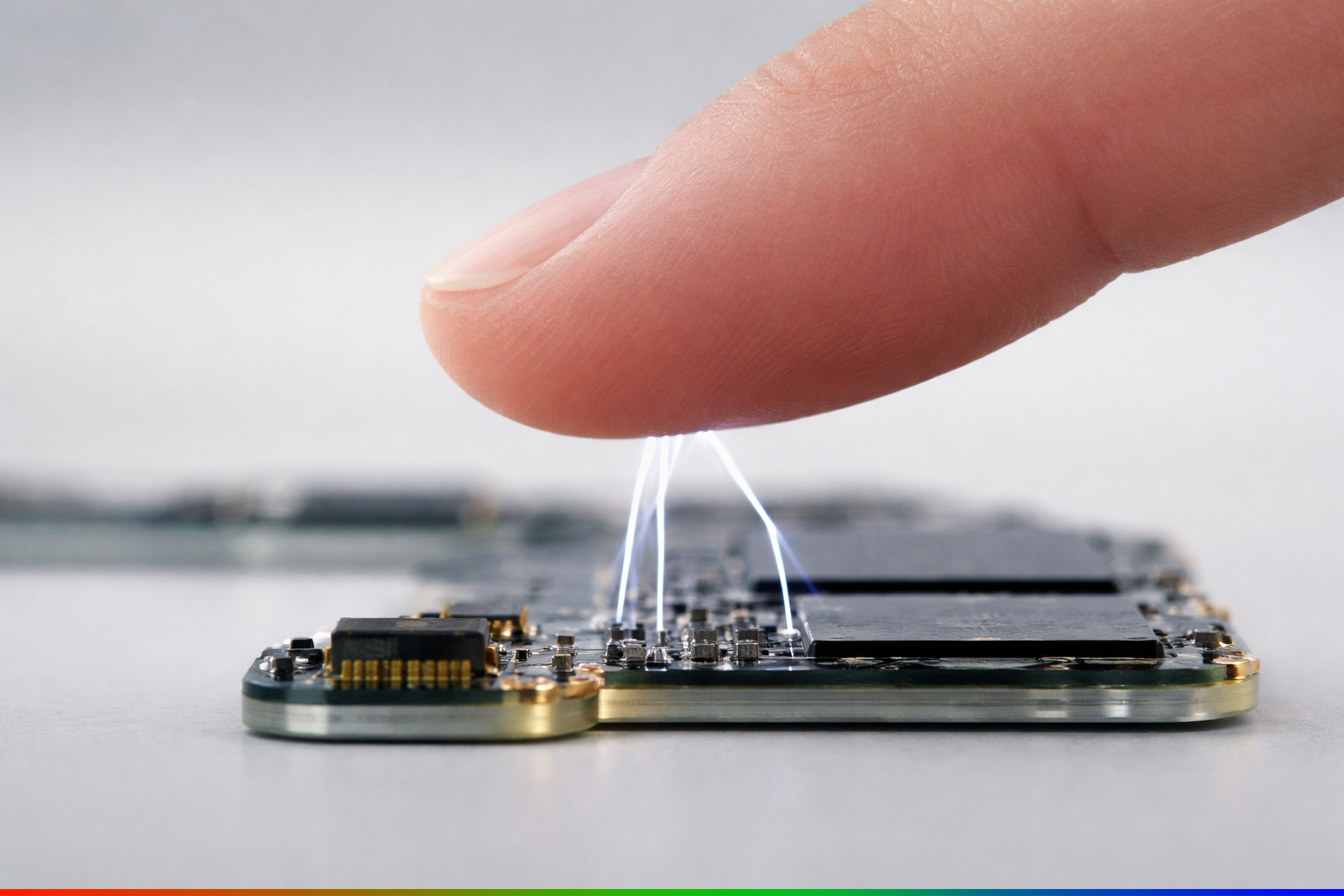
Electrostatic discharge (ESD) is one of the most common cause of damage to displays. Even low voltages can affect the sensitive electronics. This document briefly summarises the key risks and protective measures.
Typical problems and causes
- Destruction or damage of semiconductor components
- Pixel faults or failures of the TFT backplane due to ESD incident
- Sources of error: ungrounded workstations, incorrect handling, operators without ESD protection
Solutions and recommendations
- Workstations: grounded mats, wrist straps, ESD-compliant tools
- Handling & storage: only in conductive or shielded trays or bags
- Personnel: ESD shoes, lab coats, regular training and periodic review of protective measures
- Environment: humidity 40–60%, use ionisers where necessary
Conclusion
Simple, standardised measures can significantly reduce the risk of ESD damage. Consistent implementation safeguards quality and extends the service life of displays.
Introduction
Electrostatic discharge (ESD) is one of the most common cause of damage to displays. Even low voltages can affect the sensitive electronics. This document briefly summarises the key risks and protective measures.
Typical problems and causes
- Destruction or damage of semiconductor components
- Pixel faults or failures of the TFT backplane due to ESD incident
- Sources of error: ungrounded workstations, incorrect handling, operators without ESD protection
Solutions and recommendations
- Workstations: grounded mats, wrist straps, ESD-compliant tools
- Handling & storage: only in conductive or shielded trays or bags
- Personnel: ESD shoes, lab coats, regular training and periodic review of protective measures
- Environment: humidity 40–60%, use ionisers where necessary
Conclusion
Simple, standardised measures can significantly reduce the risk of ESD damage. Consistent implementation safeguards quality and extends the service life of displays.