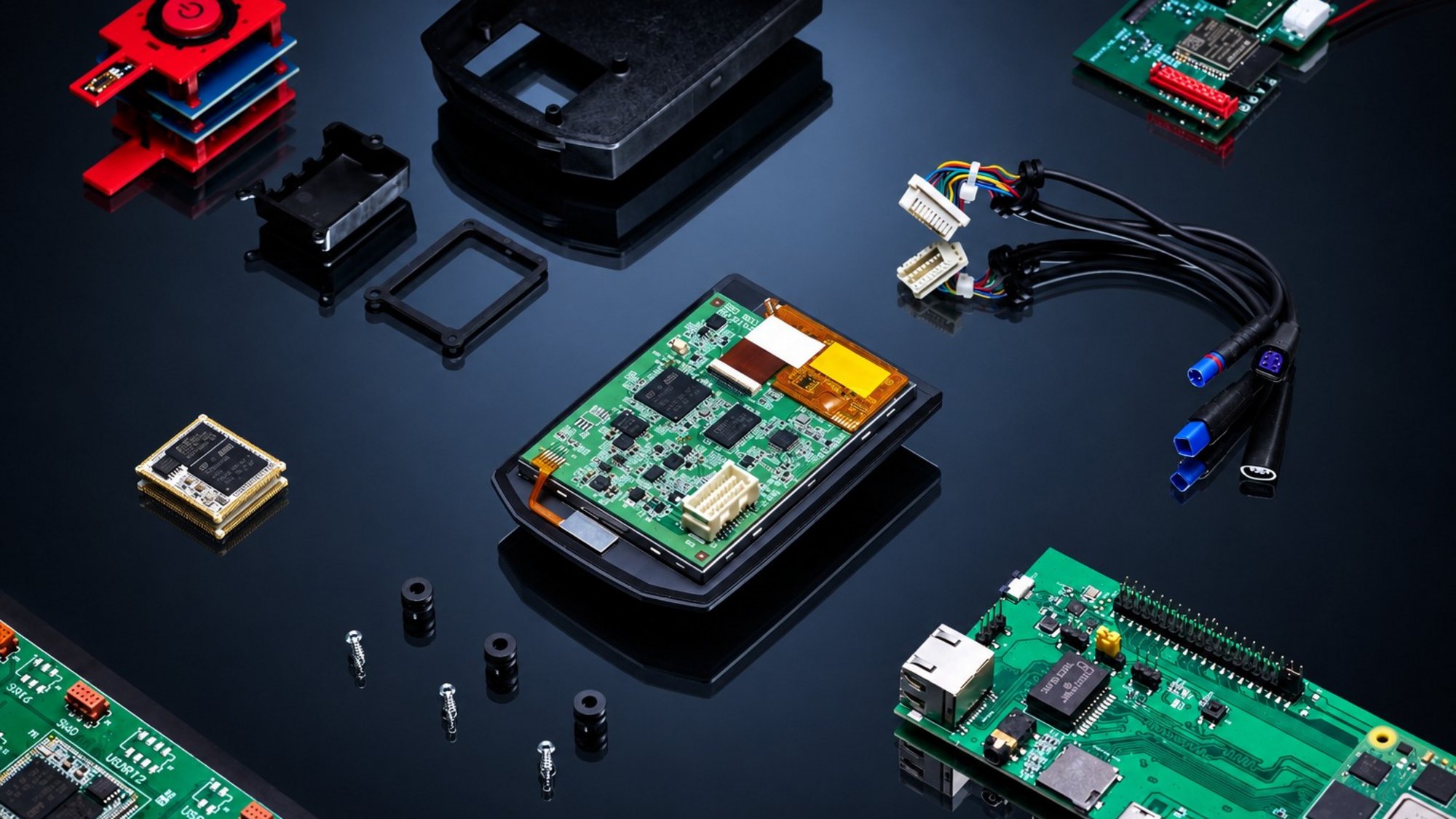
Your HMI. Engineered around your application.
Are you looking for a complete user interface solution precisely tailored to your application, technical requirements and product design? Then DMB Technics is the right partner for you.
A modern Human Machine Interface is much more thank just a display. It is the seamless interaction of the display, touch, electronics, embedded system, software, mechanics and interfaces that transforms individual components into a fully functional solution.
DMB Technics develops customized HMI-Solutions for industrial applications. In doing so, we combine display technology, hardware development, embedded electronics, software and mechanical integration into a fully integrated system. From the initial concept through prototyping and validation to series production, we accompany you throughout the entire development process.
Our HMI-Solutions are engineered not only to perform reliably, but also to provide long-term robustness, user-friendly operation and cost-effecient integration.
What Is an HMI-Solution?
An HMI-Solution is the central interface between human and machine. It enables users to operate, control, visualize and monitor a device or system.
Depending on the application, an HMI-Solution can consist of various components:
- Display
- Touch panel
- Cover lens
- Electronics
- Embedded system
- Microcontroller
- Sensors
- Connectors and cables
- Software
- User interface
- Mechanical integration
- Housing or front assembly
DMB Technics ensures that all these components are perfectly coordinated from a technical, mechanical and functional perspective. The result is a complete HMI solutions that integrates seamlessly into your final product.
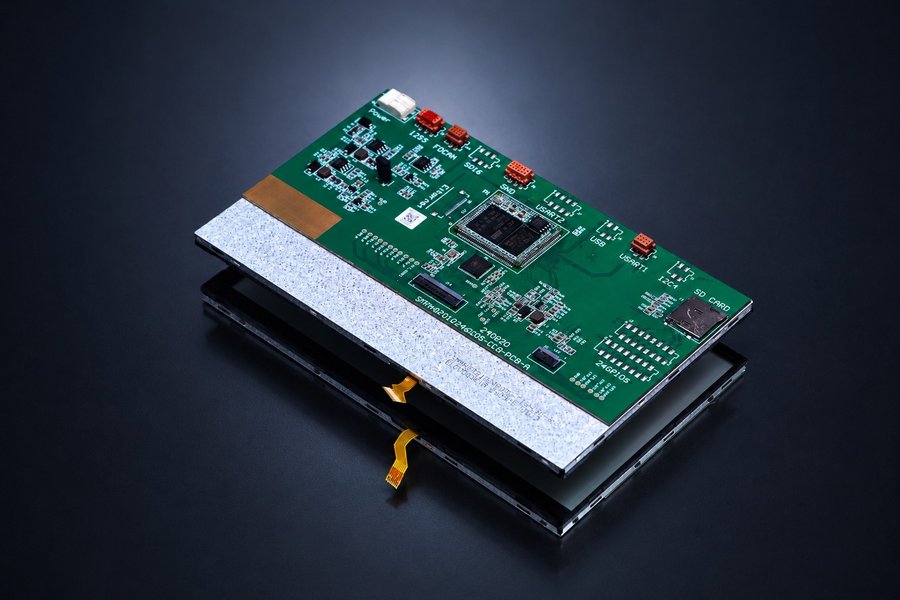
Hardware is the technical foundation of every HMI-Solution. It connects the display, touch, microcontroller, sensors, interfaces and power supply to form a stable and reliable electronic unit.
From the early stages of development, we evaluate the most suitable architecture for your application. We consider processing power, power consumption, form factor, thermal requirements, EMC, interfaces and long-term availability.
Our hardware development capabilties range from compact control boards to complex embedded boards with multiple communication interfaces.
Key technical areas:
- Circuit design
- Analog and digital design
- High-speed PCB design
- Multilayer PCBs
- Rigid, flex and rigid-flex PCBs
- Power management
- Display and touch integration
- Signal integrity
- EMC-compliant design
- Thermal management
- Design for manufacturing
- Design for testability
The goal: robust, reliable and production-ready electronics precisely engineered for your application.
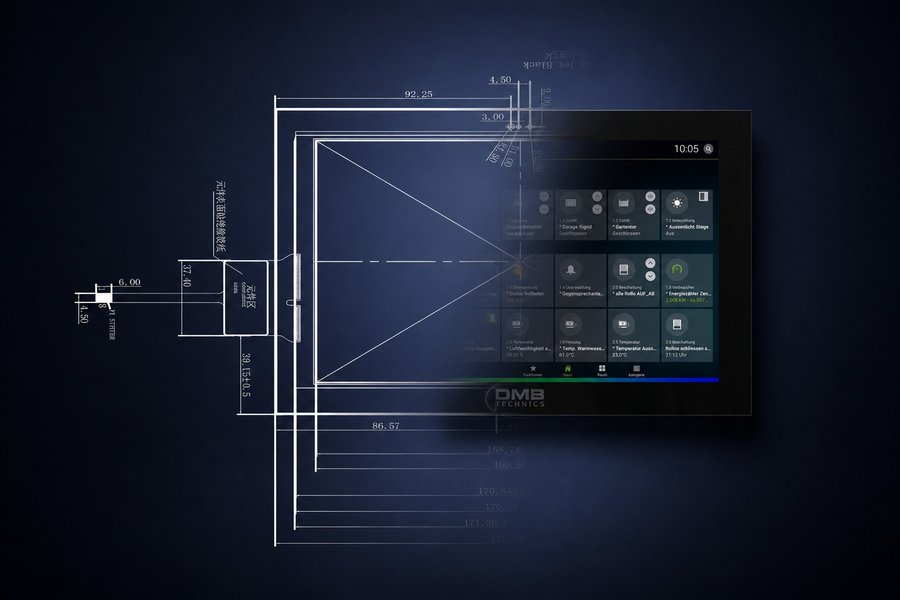
An HMI-Solution must not only work electronically, but also be integrated seamlessly into the final device from a mechanical perspective. This is exactly where CAD design comes into play.
We develop housings, front assemblies, display mounts, brackets and mechanical interfaces to ensure that electronics, display, touch panel, cover lens, cables and seals fit together perfectly.
It is not just about form and design. We also consider assembly, tolerances, heat dissipation, IP protection, serviceability and manufacturability.
Typical CAD engineering services:
- 2D and 3D design
- Housing development
- Front panel integration
- Display mounting
- Touch and cover lens integration
- Tolerance analyses
- Sealing concepts
- Mechanical feasibility check
- Rapid prototyping
- Design reviews
The result is a complete HMI assembly that fits seamlessly into your product technically, visually and mechanically.
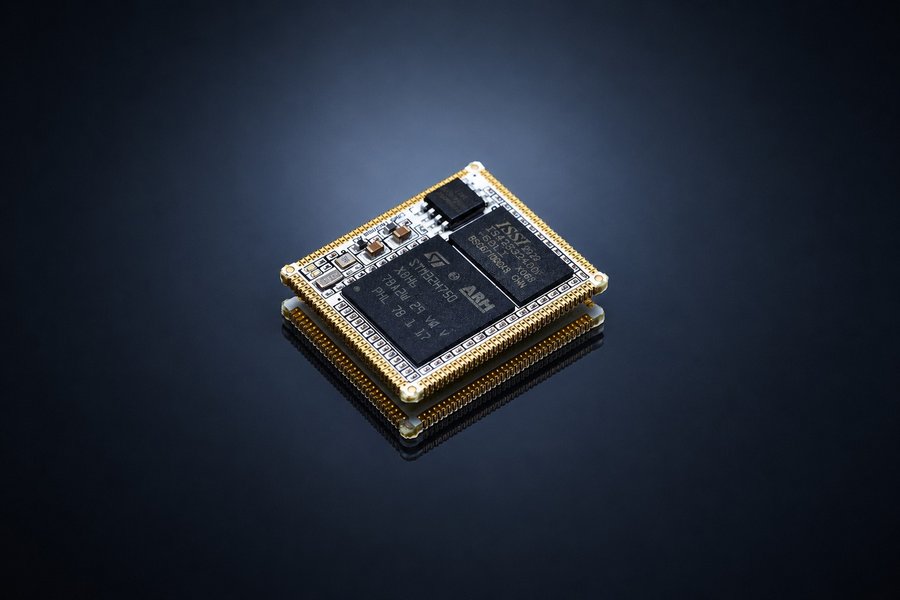
The embedded system is the central control unit within the HMI-Solution. It processes inputs, controls the display, communicates with sensors and peripherals and forms the basis for modern user interfaces.
Depending on the application, we use energy-efficient microcontroller systems or powerful embedded Linux platforms. The key is to ensure that performance, response time, memory requirements, boot behaviour and maintainability are optimally matched to the application.
Possible platforms:
- STM32 (H7-Serie)
- ESP32 (P4, S3)
- Radxa Computer Module
- Toradex SoM (Verdin etc.)
- Raspberry Pi Compute Module
- NXP (Kinetis-Family, RT-Serie)
- Microchip
Operating systems and development environments:
- Embedded Linux
- Yocto
- FreeRTOS
- Bare metal
Our embedded engineering services include:
- Firmware development
- Board support package
- Bootloader
- Hardware drivers
- Display and touch control
- Real-time control
- Communication interfaces
- OTA updates
- Proof of Concepts
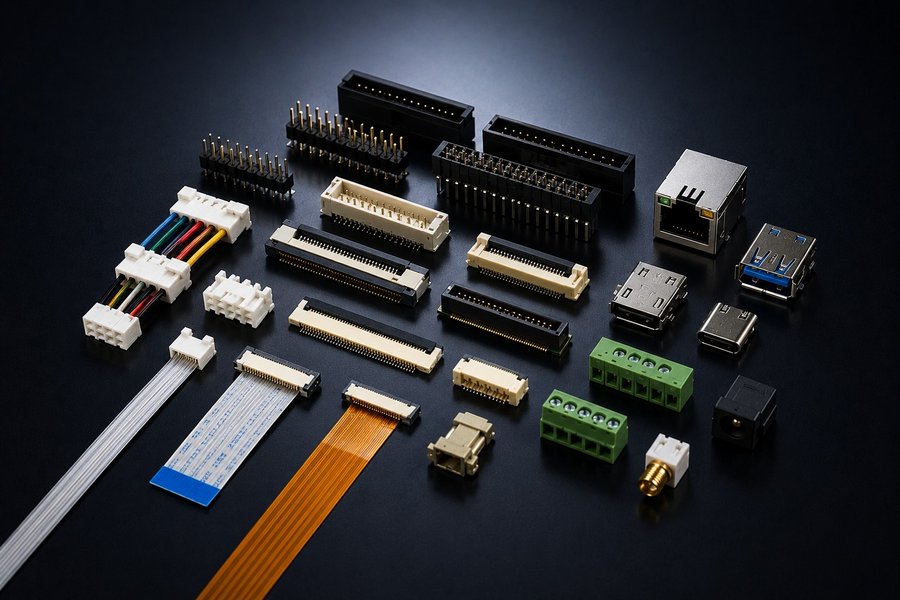
An HMI-Solution requires many components to be connected reliably. These include the display, touch panel, circuit boards, sensors, controls, power supply and external interfaces.
The choice of the right connectors and cables has a direct impact on signal quality, ease of assembly, EMC performance and the overall lifetime of the system.
DMB Technics develops connectivity solutions precisely matched to the available installation space, electrical requirements and mechanical loads.
Supported interfaces:
- HDMI
- eDP
- LVDS
- MIPI DSI
- RGB
- SPI
- I²C
- UART
- Ethernet
- CAN
- RS485
- Wi-Fi 6
- Bluetooth 5 LE
- USB-C / USB 2.0
Possible connectivity solutions:
- FFC
- FPC
- Board-to-board
- Wire-to-board
- Shielded cables
- Highly flexible cables
- Lockable connector systems
- Custom cable lengths
- Customized pin assignment
This ensures reliable data transmission, power supply and mechanical connectivity, even under demanding operating conditions.
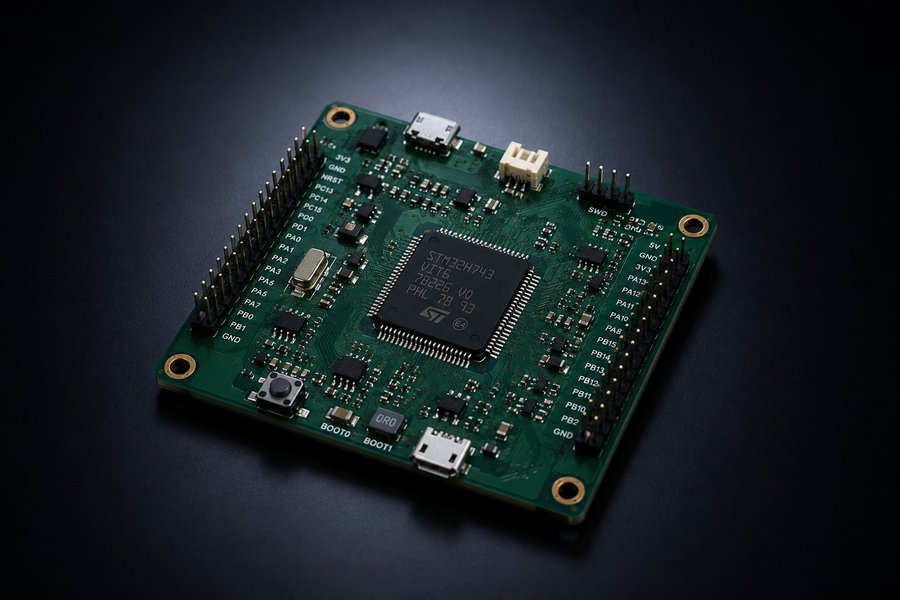
Not every HMI-Solution requires a complex embedded Linux system. For many applications, a powerful microcontroller is the more efficient choice.
Microcontrollers take over targeted control tasks within the system. They read sensor data, process touch signals, control LEDs or actuators and communicate with other system components.
Especially for compact, energy-efficient or cost-optimized HMI systems, selectin the right microcontroller is essential.
Typical functions:
- Display control
- Touch controller
- Sensor integration
- Data acquisition
- PWM signals
- LED and actuator control
- Power management
- Communication protocols
- Diagnostic functions
- Safety functions
By carefully selectin the required processing power, memory, interfaces and power consumption, we create an efficient control solution precisely desigend for the intended functions.
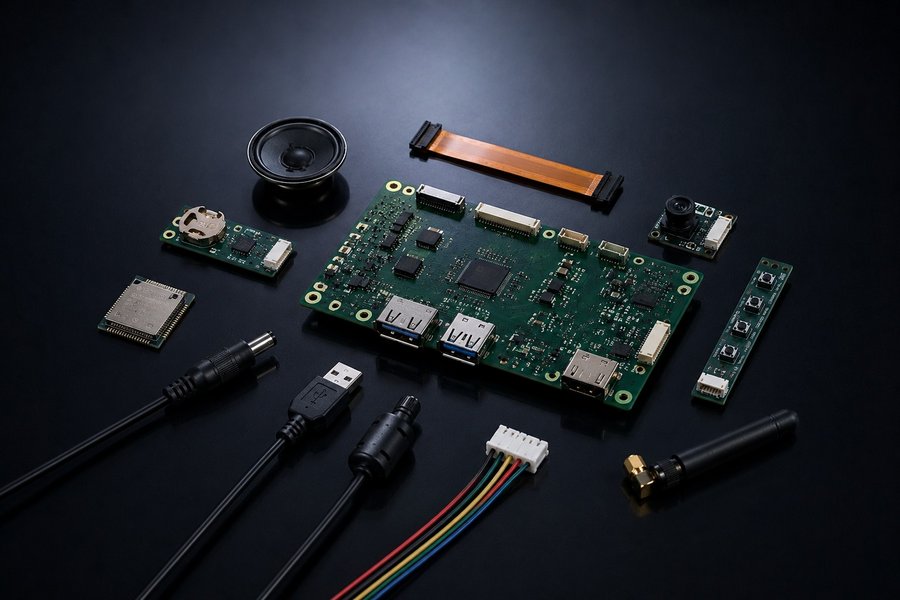
Modern HMI-Solutions often go far beyond display and touch operation. They capture environmental data, identify users, provide acoustic feedback, enable wireless communication or extend the user interface with additional input elements.
DMB Technics integrates the appropriate peripherials directly into the overall system. Electronics, software and mechanics are desigend to work seamlessly together.
Possible extensions:
- Camera
- Microphone
- Speaker
- RFID
- NFC
- Fingerprint
- Encoder
- LED indicators
- Buzzer
- Sensors
- SD cards
- Wi-Fi
- Bluetooth
- GNSS
- Ambient light sensors
- Proximity sensors
Depending on the application, these components enable additional functions such as user identification, proximity detection, automatic brightness adjustment, audio output or wireless communication.
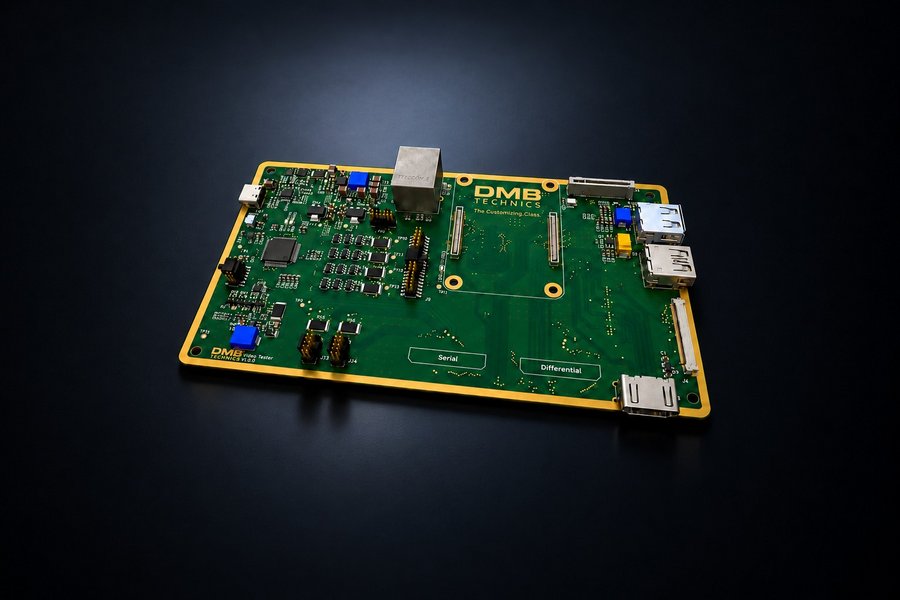
Often, a new display, touch solution or a modern HMI module needs to be integrated into an existing system. However, the existing interfaces are not always directly compatible.
With customized interface conversion, different signal standards, data protocols and display interfaces can be reliably connected.
Typical conversions:
- HDMI to LVDS
- HDMI to MIPI DSI
- RGB to LVDS
- LVDS to eDP
- SPI to RGB
- USB to UART
- CAN to Ethernet
- I²C to sensor interfaces
Beyond signal conversion itself, we also consider timing, signal levels, EMC, cable lengths, data rates and mechanical integration.
The advantage: Existing electronics can continue to be used while new display or HMI components are integrated. This reduces development effort, costs and technical risks.
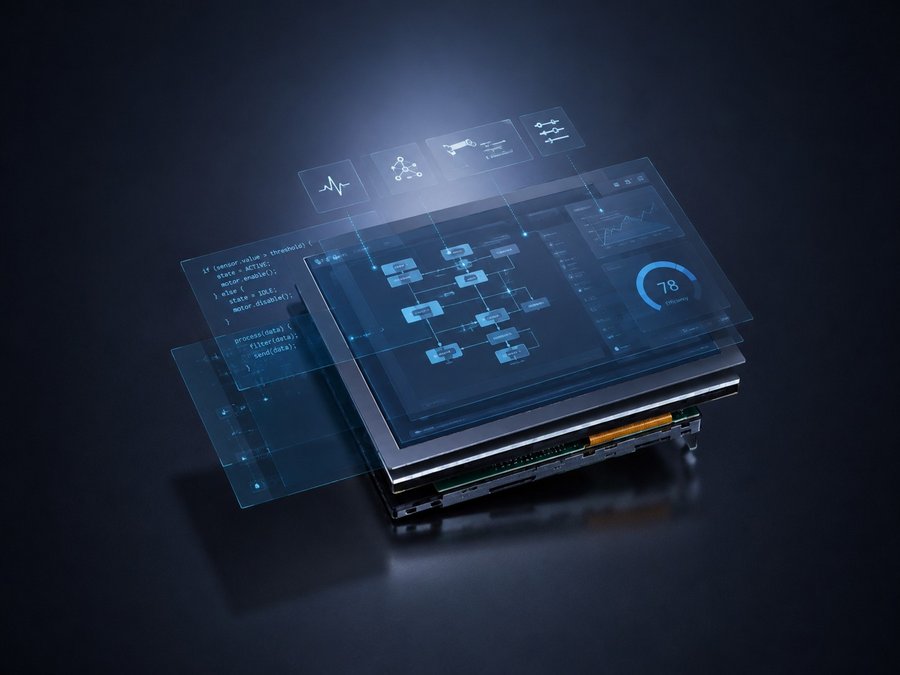
Software transforms a technical platform into an intuitive HMI-Solution. It connects hardware functions, display visualization, touch operation, system logic and communication.
DMB Technics develops software tailored to the specific hardware platform. This allows performance, usability, stability and maintainability to be optimized for each application.
Software areas:
- Embedded software
- Firmware
- GUI development
- HMI design
- Driver development
- Middleware
- Communication protocols
- Diagnostic software
- Test software
- Production software
- Update functions
- User guidance
- System logic
Possible frameworks:
- Qt
- LVGL
- Embedded Wizard
- TouchGFX
Communication with higher-level systems:
- Modbus
- CANopen
- EtherCAT
- MQTT
- OPC UA
- TCP/IP
- REST API
Well-designed software ensures intuitive operation, fast response times, clear visualization and reliable system communication.